Last season · 2025–26 · DECODE presented by RTX
Last Season's Robot
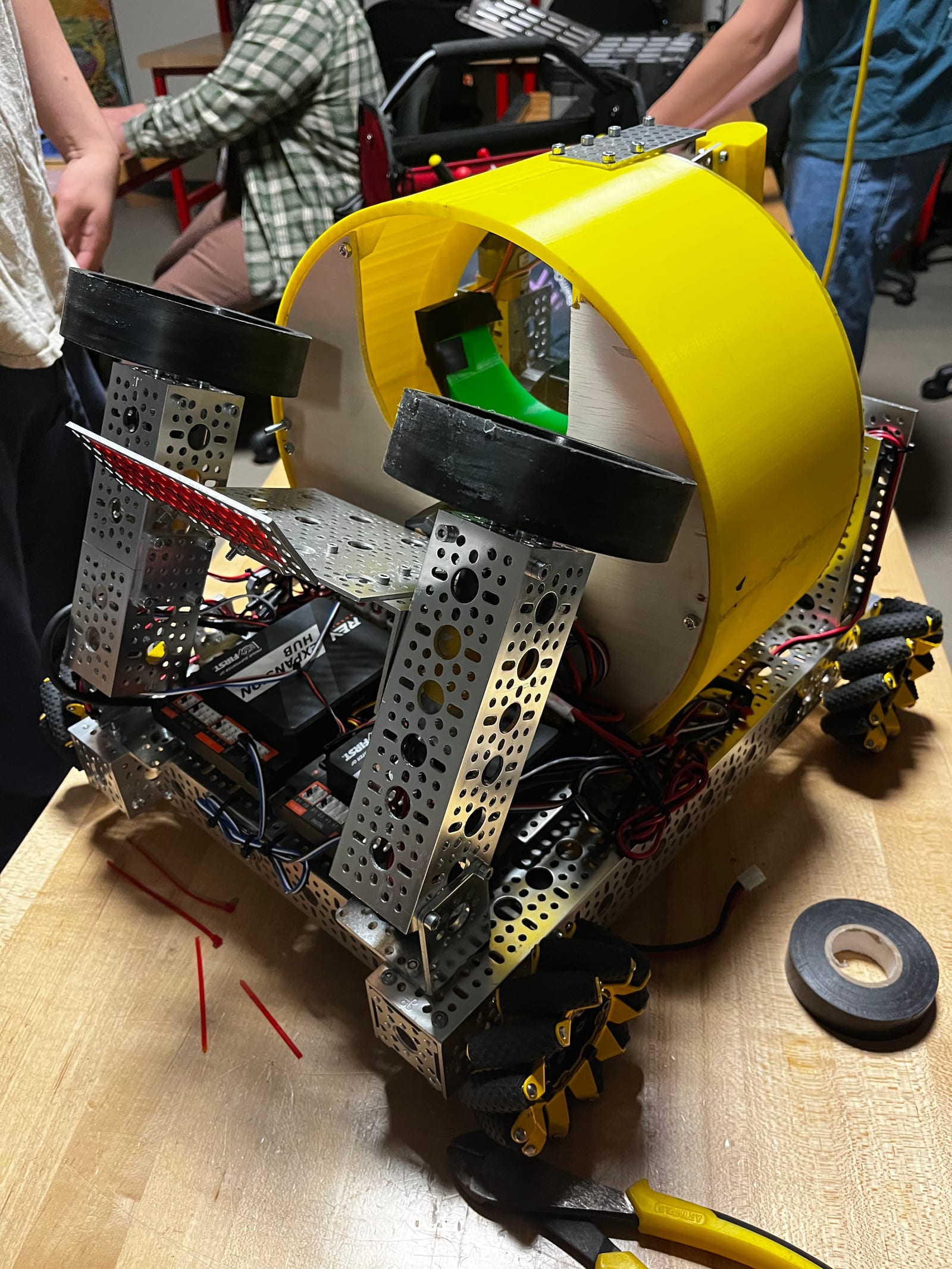
Every FTC season is a new game and a new robot. This is the one we built for DECODE: a rotating drum that holds three artifacts, a flywheel that launches them, and an intake that feeds the drum from the floor. Everything below was designed, built, and programmed by students.
The 2026–27 game has just been released. This year's robot gets its own section here as soon as there is something to photograph.
The Drum
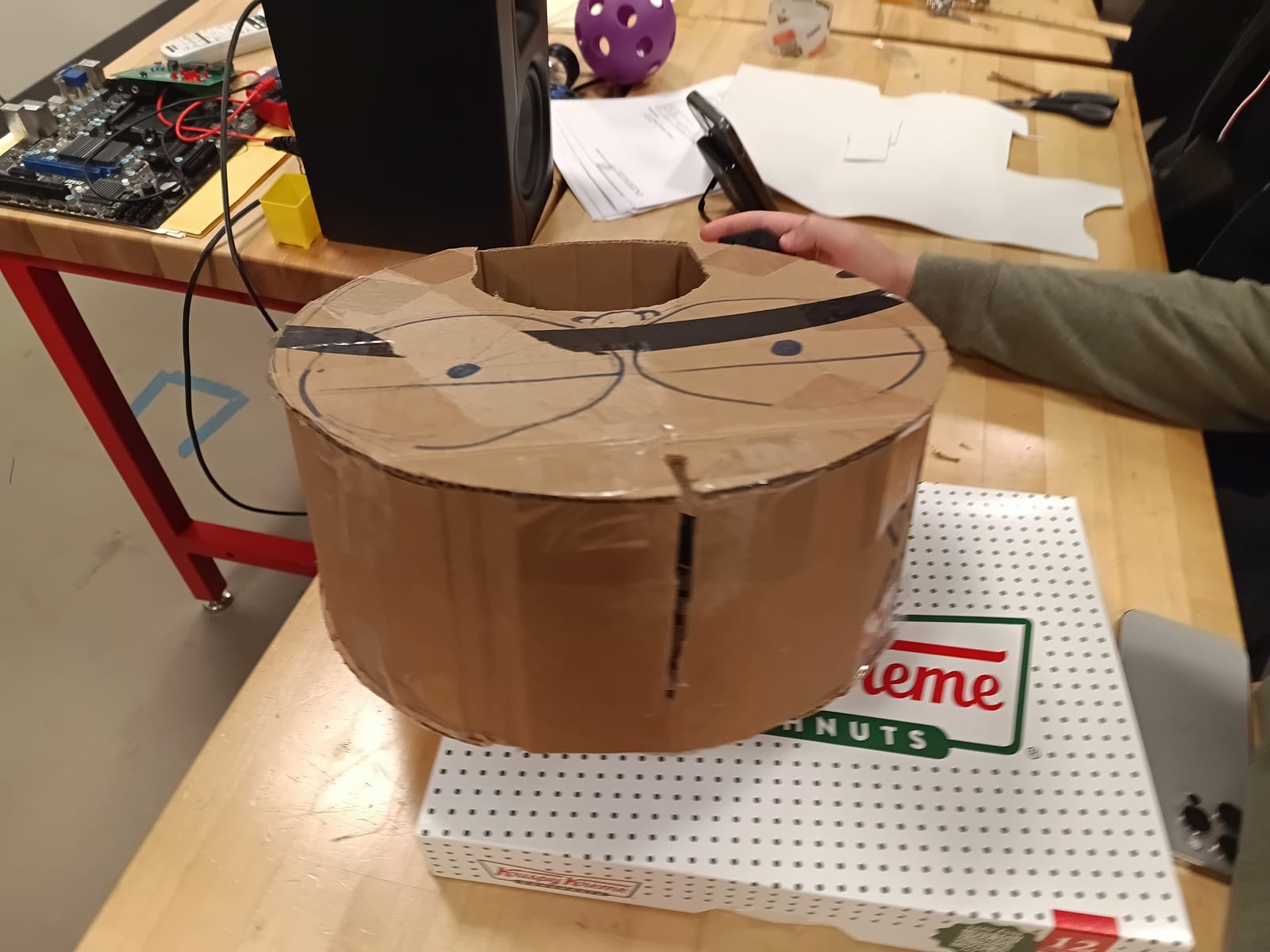
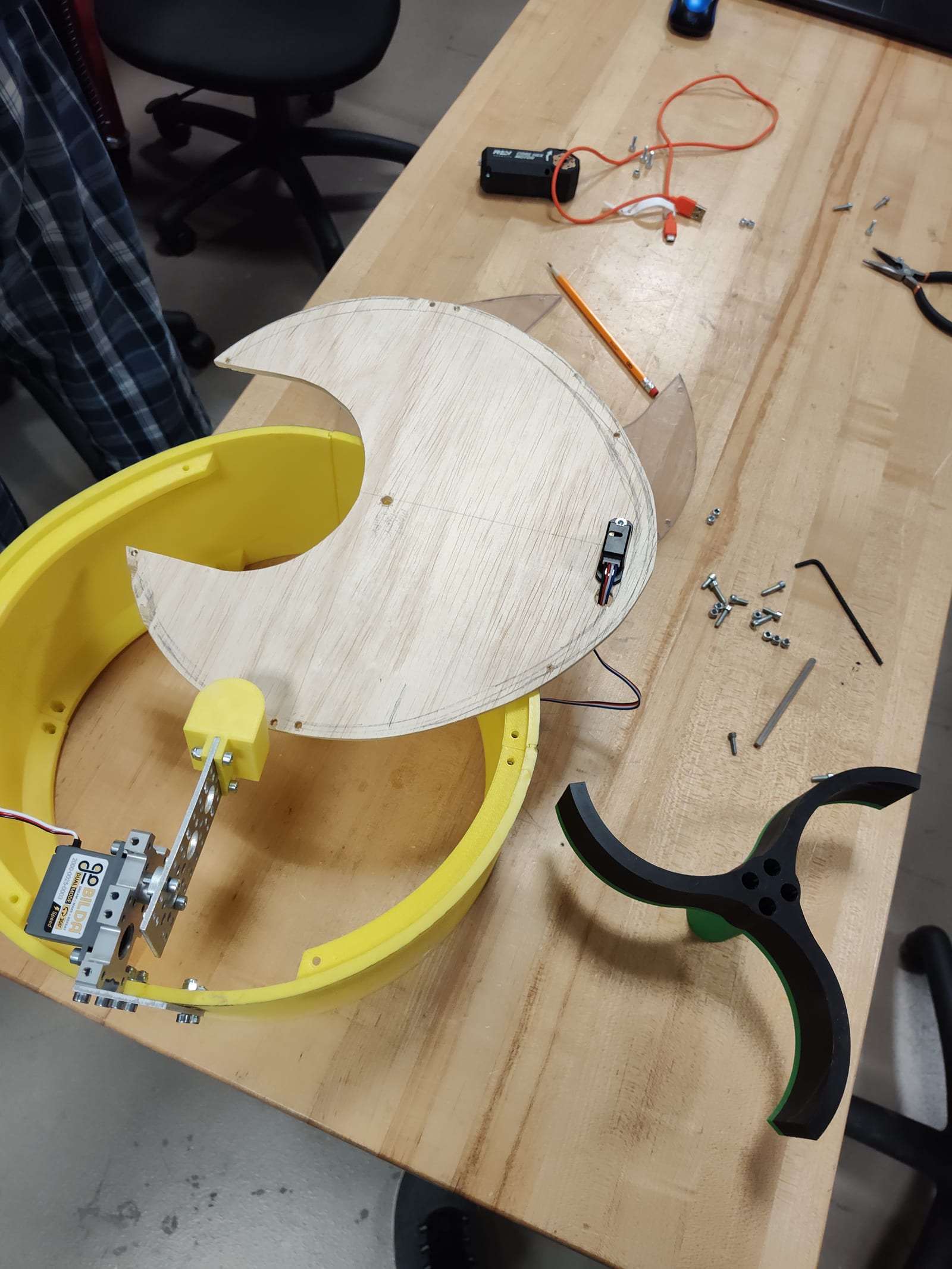
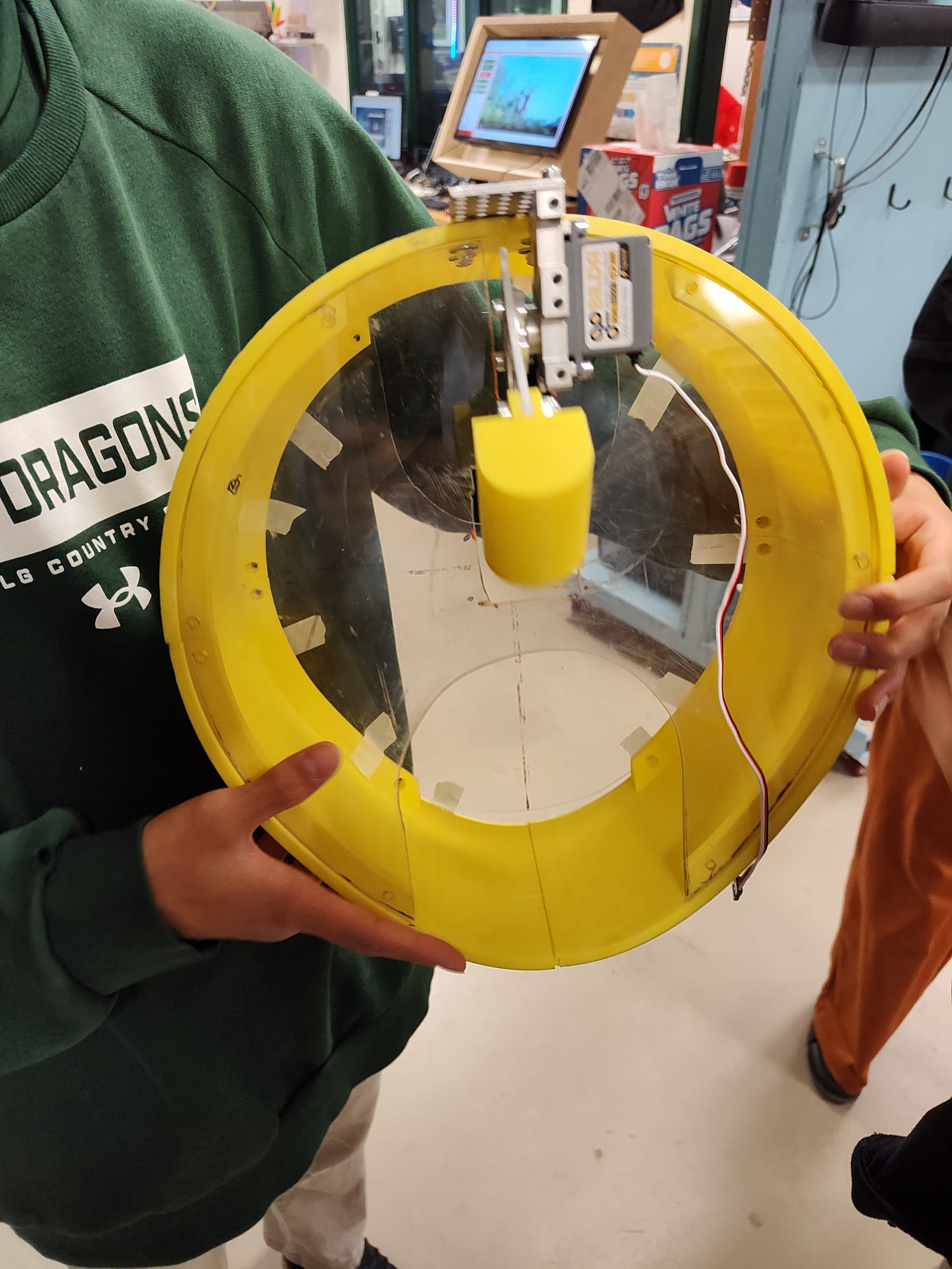
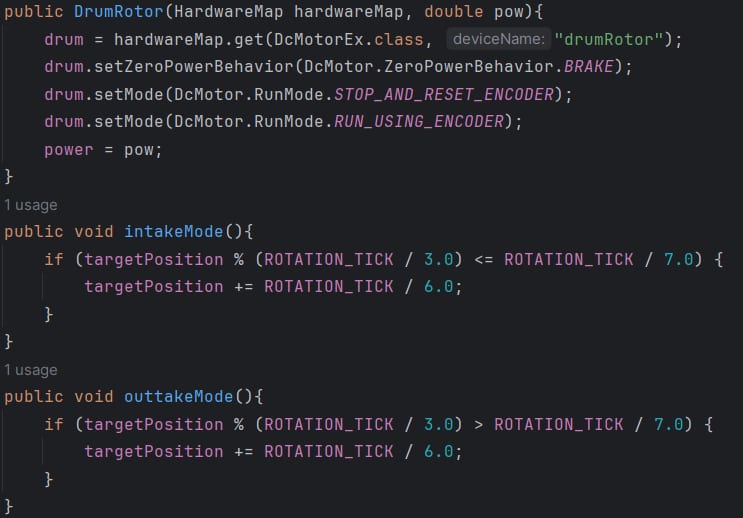
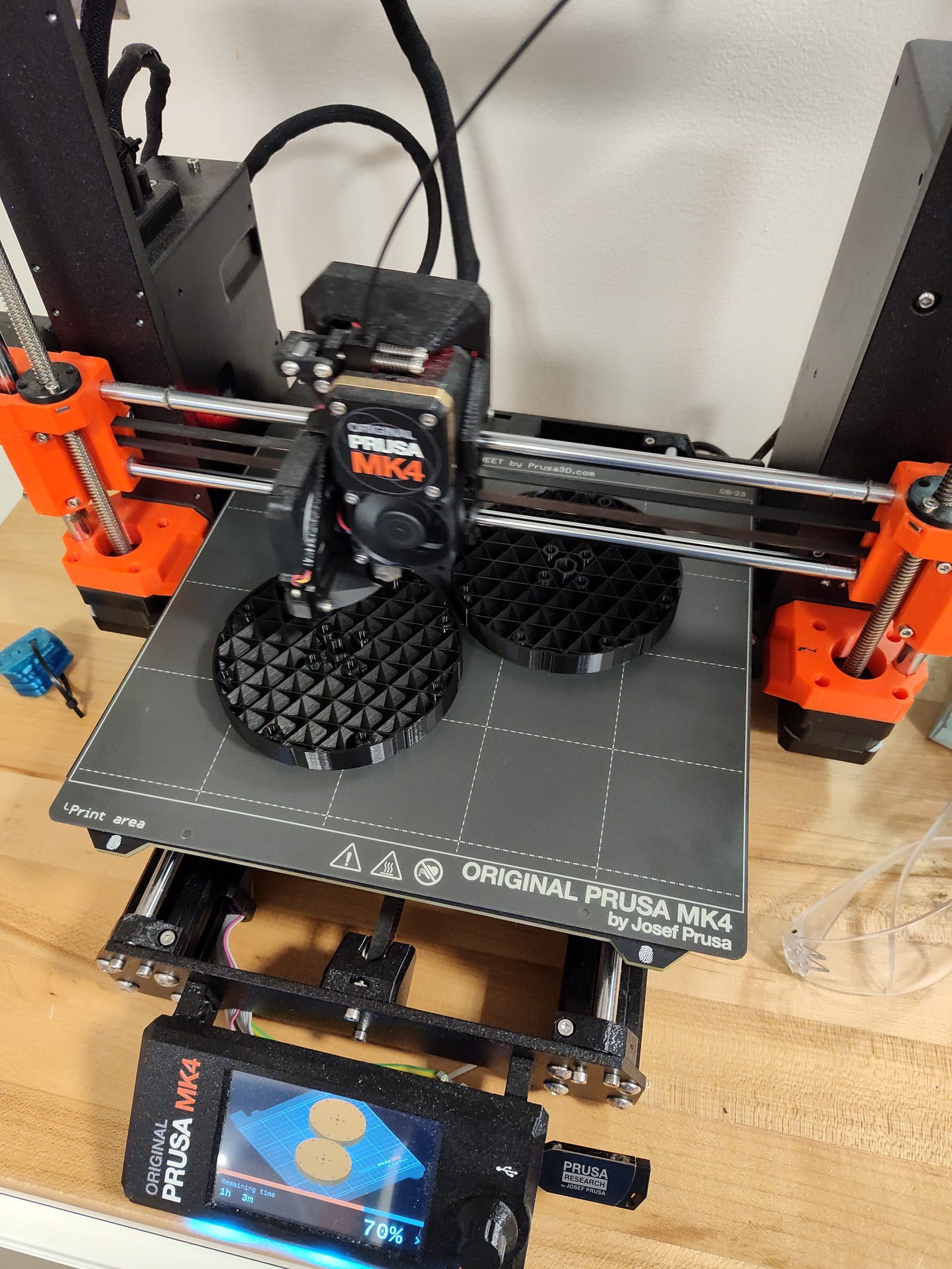
The drum is a rotating magazine with three pockets. It started as a cardboard cylinder held together with tape, became a plywood disc inside a yellow ring, and ended up as a 3D-printed ring on a plexi face with printed brackets.
A motor with an encoder turns it. The code steps the drum one-sixth of a turn at a time, so a pocket is always either facing the intake or facing the launcher, never in between.
- Capacity3 artifacts
- DriveOne motor, encoder-indexed
- VersionsCardboard → plywood → printed ring
The Launcher
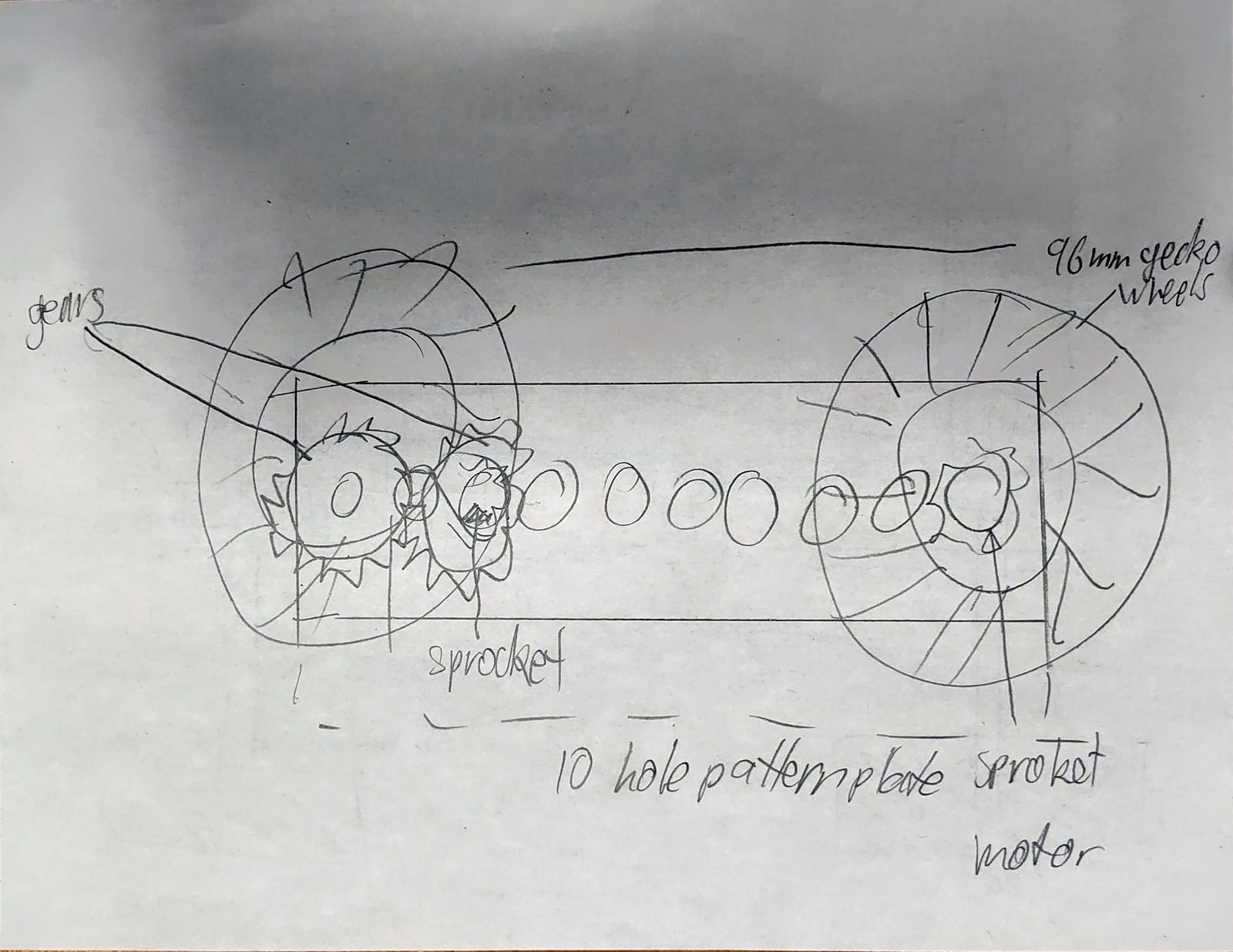
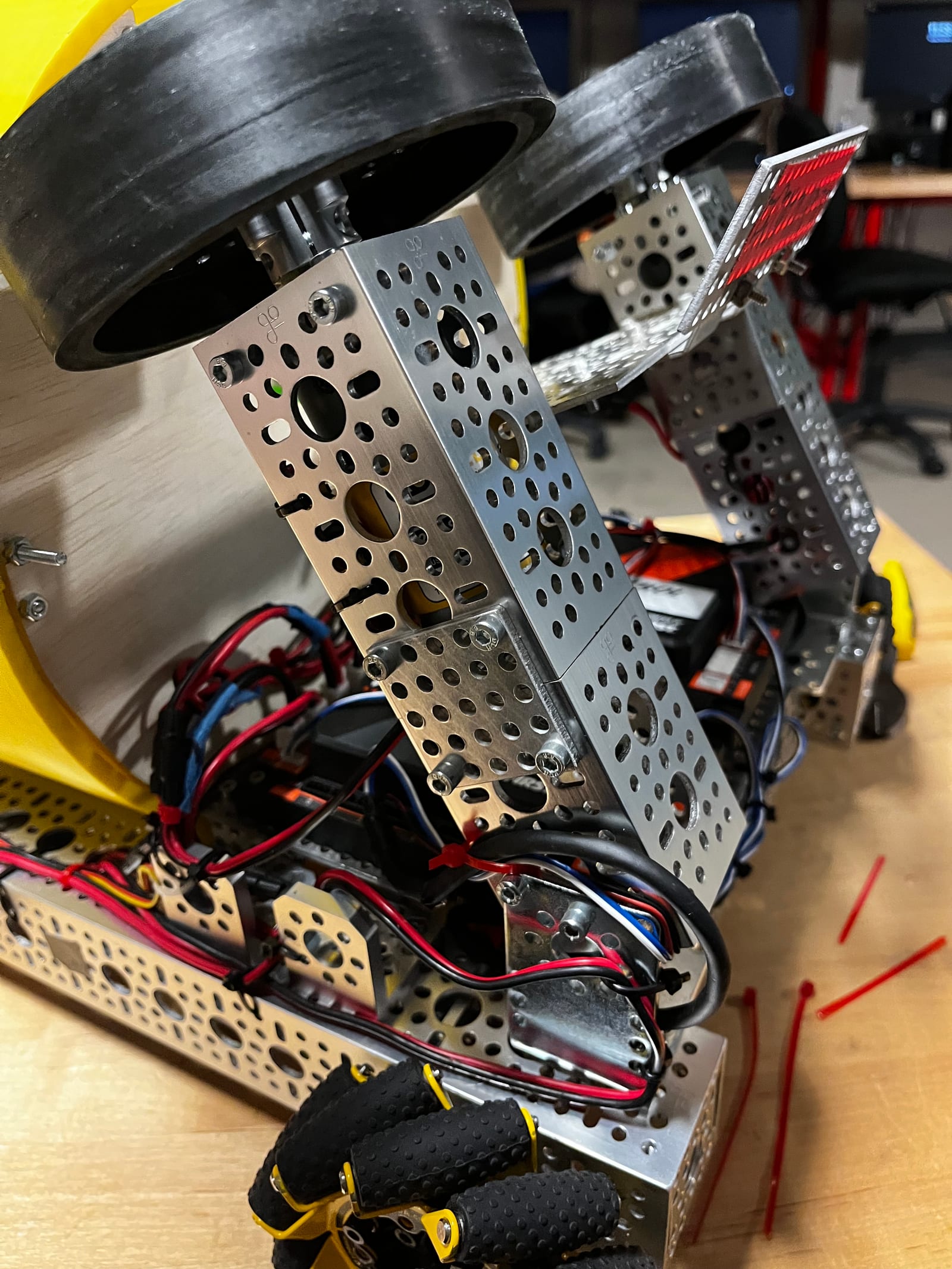
A flywheel launcher sits behind the drum. When a pocket lines up, the artifact is pushed into the spinning wheel and leaves at a speed we can set from the driver station.
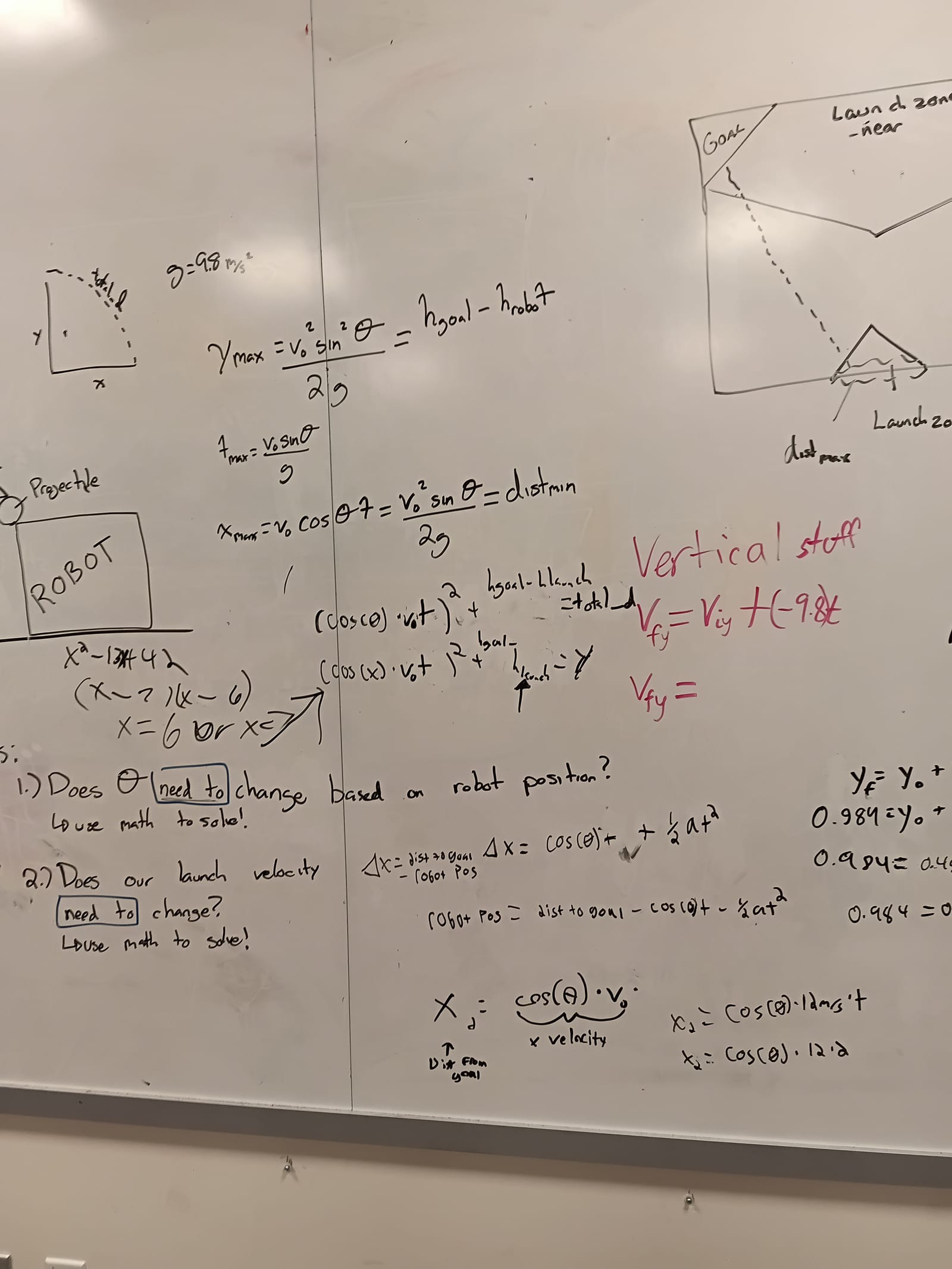
Before we built it we did the projectile math on the whiteboard: how fast the artifact has to leave to clear the goal from the distances we expect to shoot from, and how much the angle matters. The first prototype was two motors in a channel; the version on the robot uses the same idea with better bearings and a lot more zip ties.
- TypeFlywheel
- Motors2, on one channel
- Tuned byWhiteboard physics, then testing
The Intake
The intake pulls artifacts off the floor and into the drum. We tried a lot of things first: twin spinning bars, a cardboard ramp, a kicker that pushes artifacts in from the side.
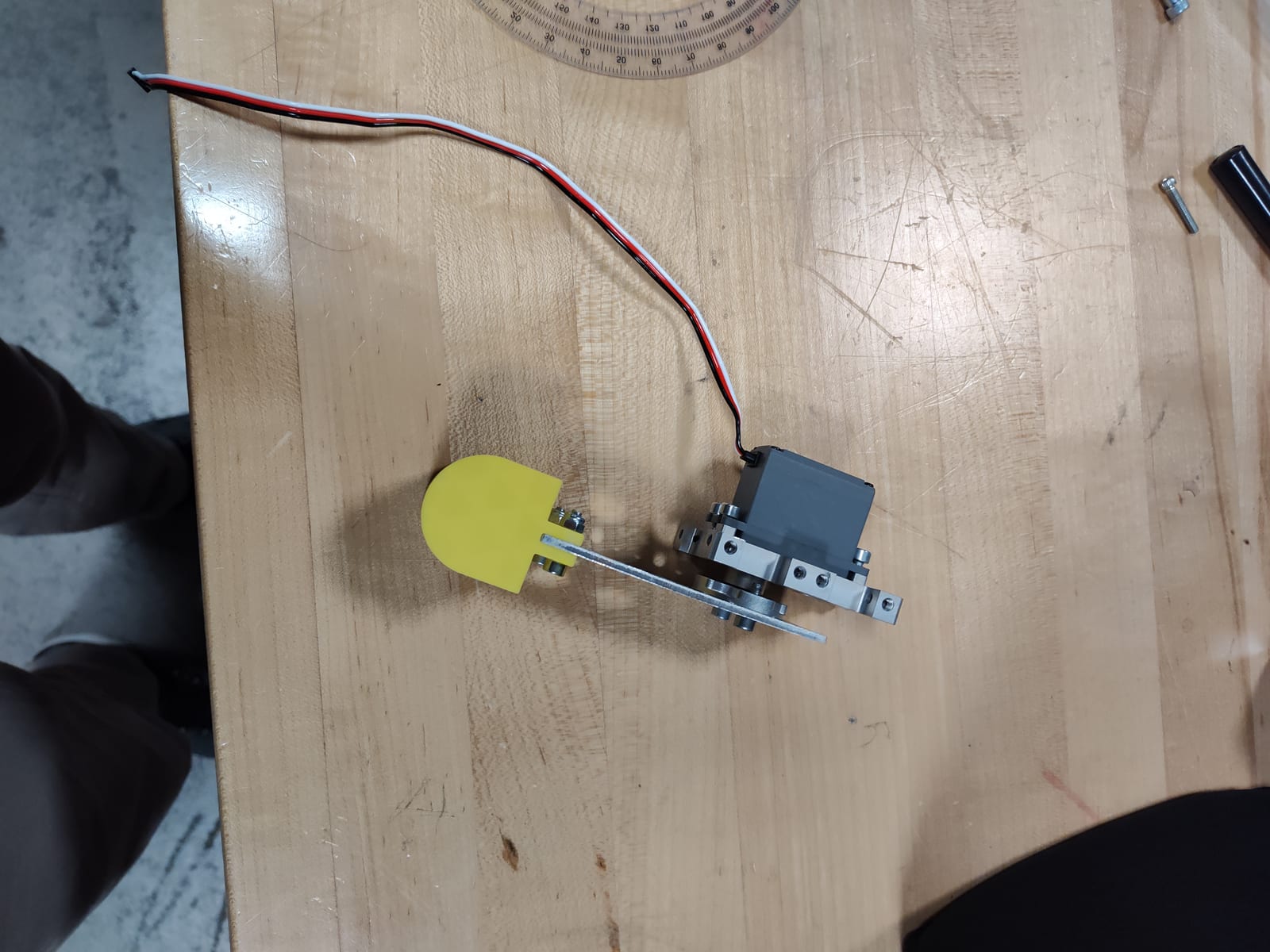
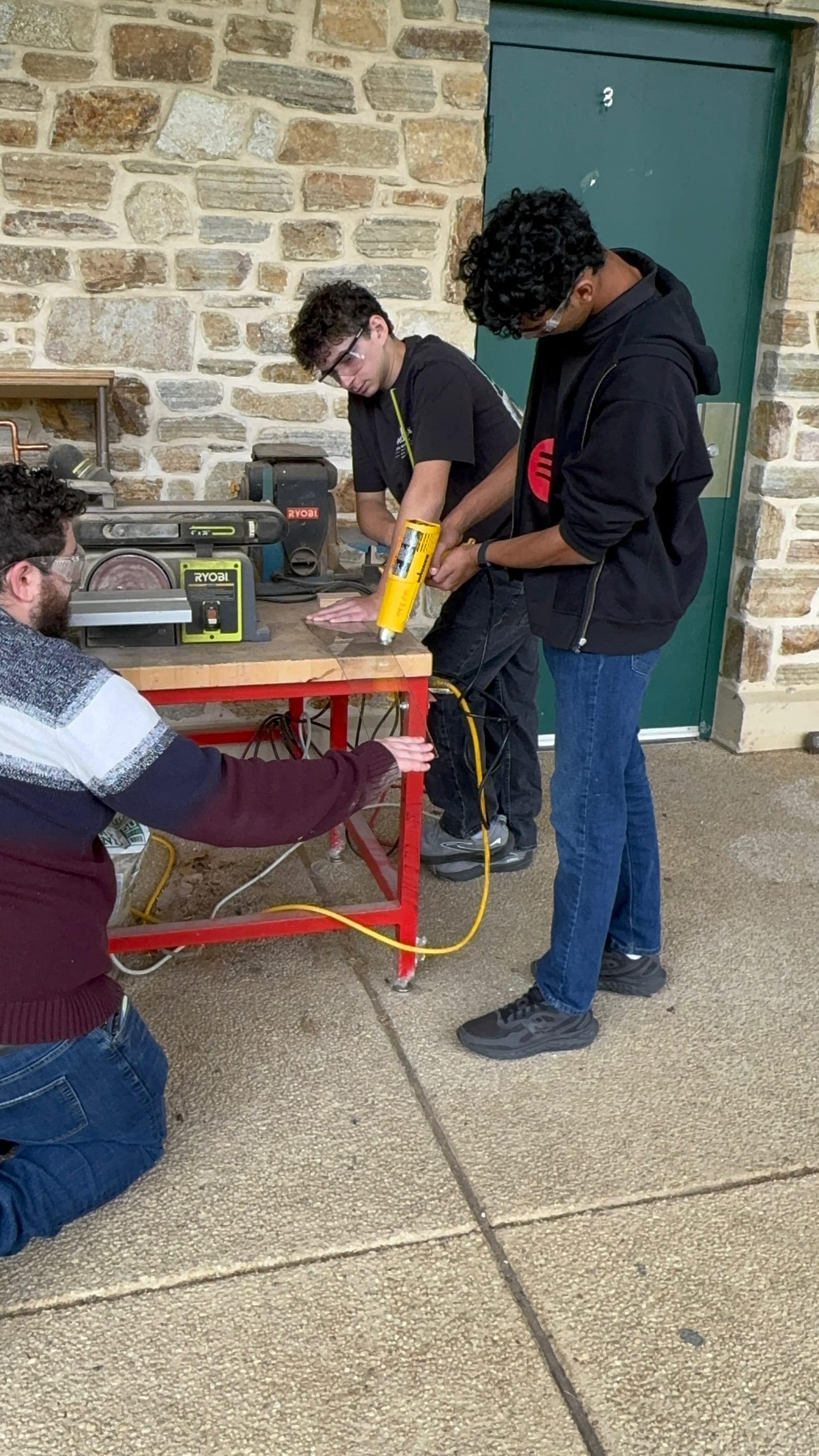
What worked was a row of 3D-printed compliant "cheese wheels" on a shaft, with plexi guides that we shaped by heating the plastic with a heat gun and bending it over a form. The plexi steers each artifact into the open pocket.
- Rollers3D-printed compliant wheels
- GuidesHeat-formed plexi
- PrototypesSpinning bars, ramp, kicker
Chassis & Odometry
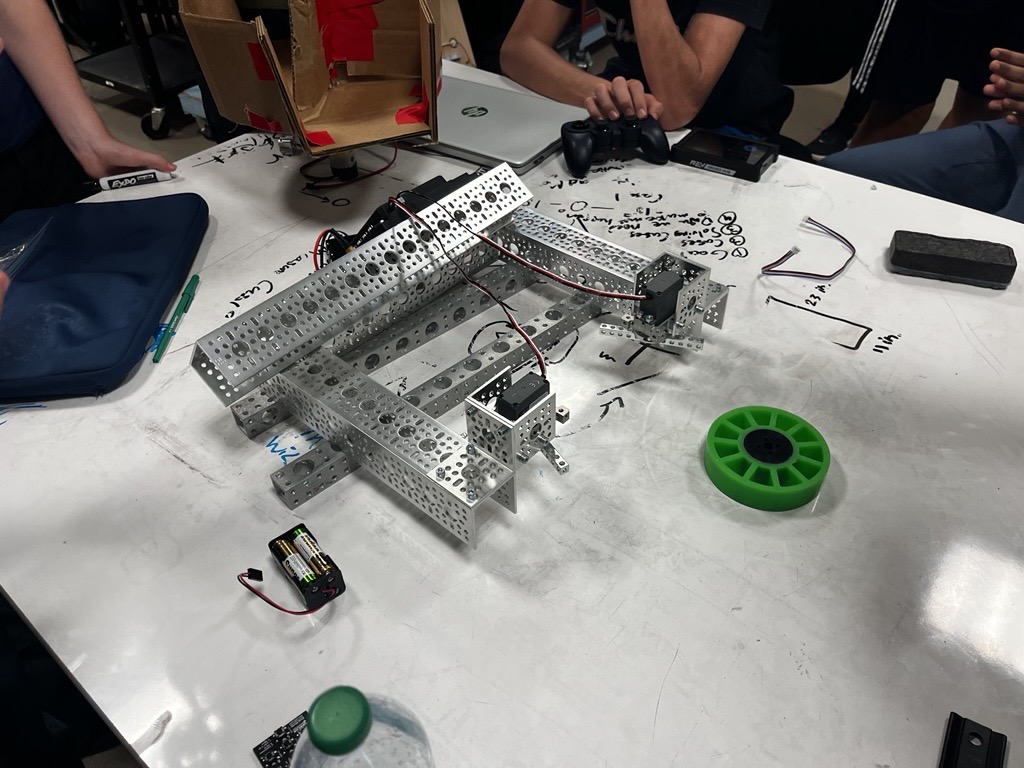
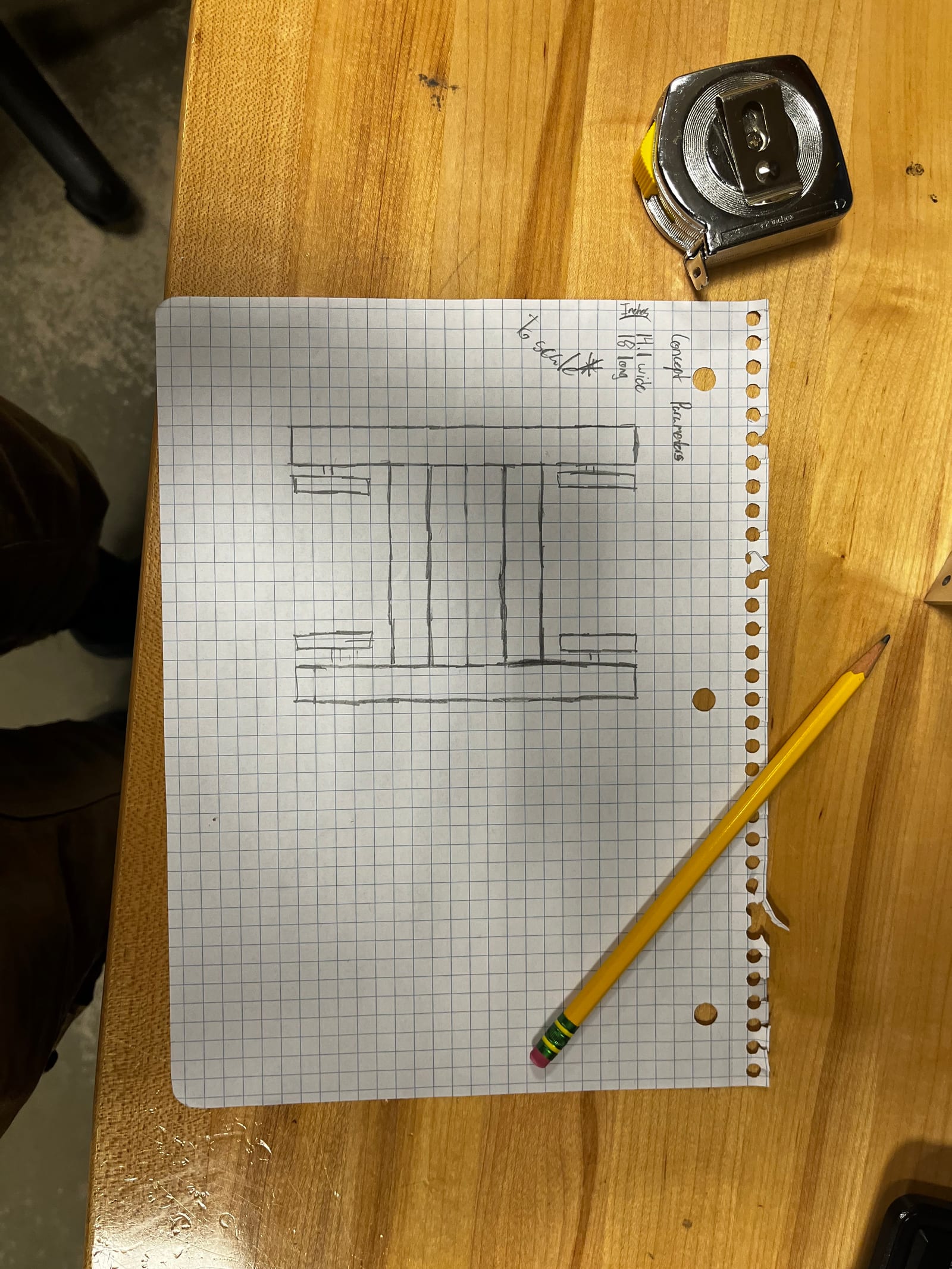
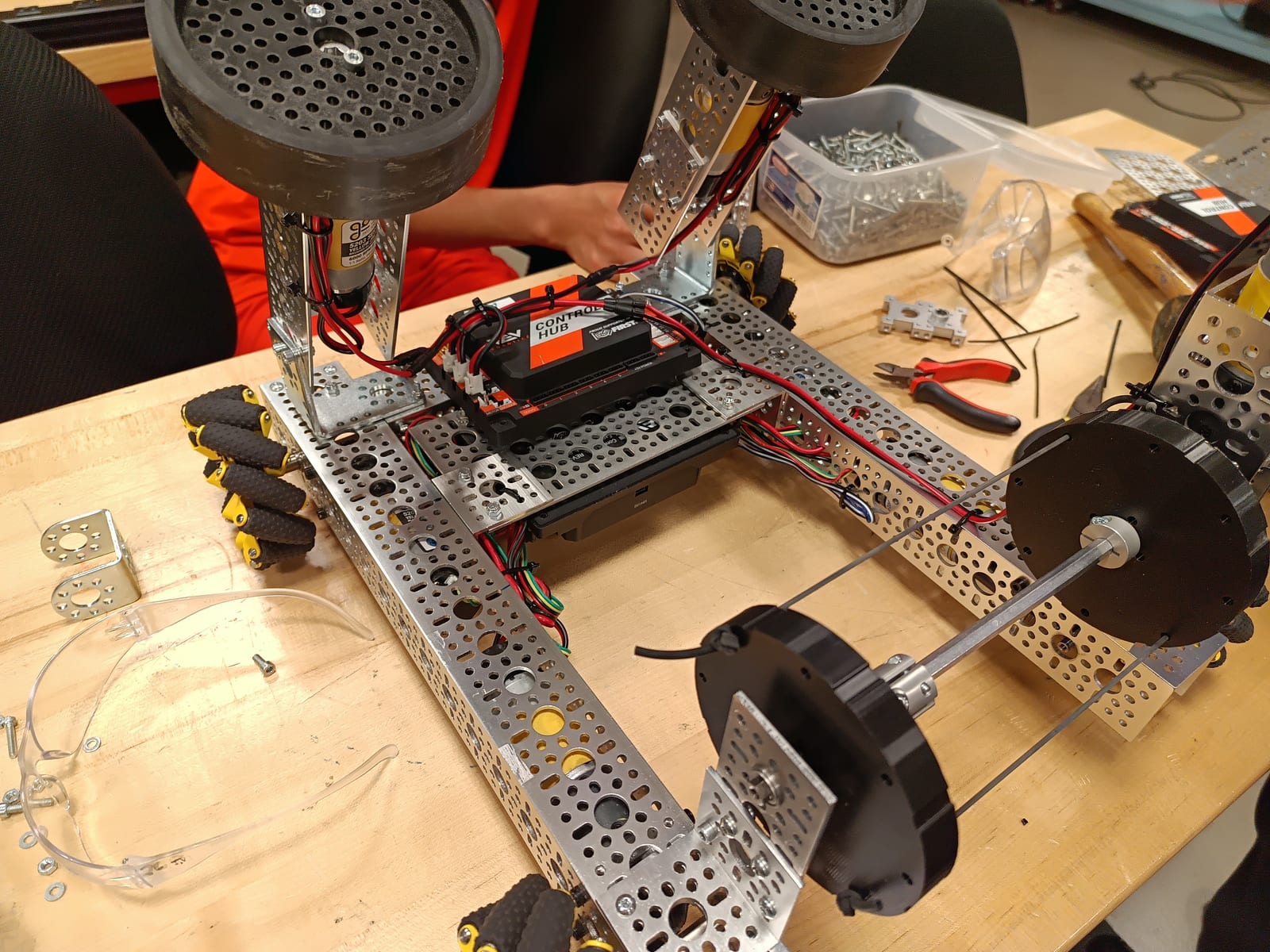
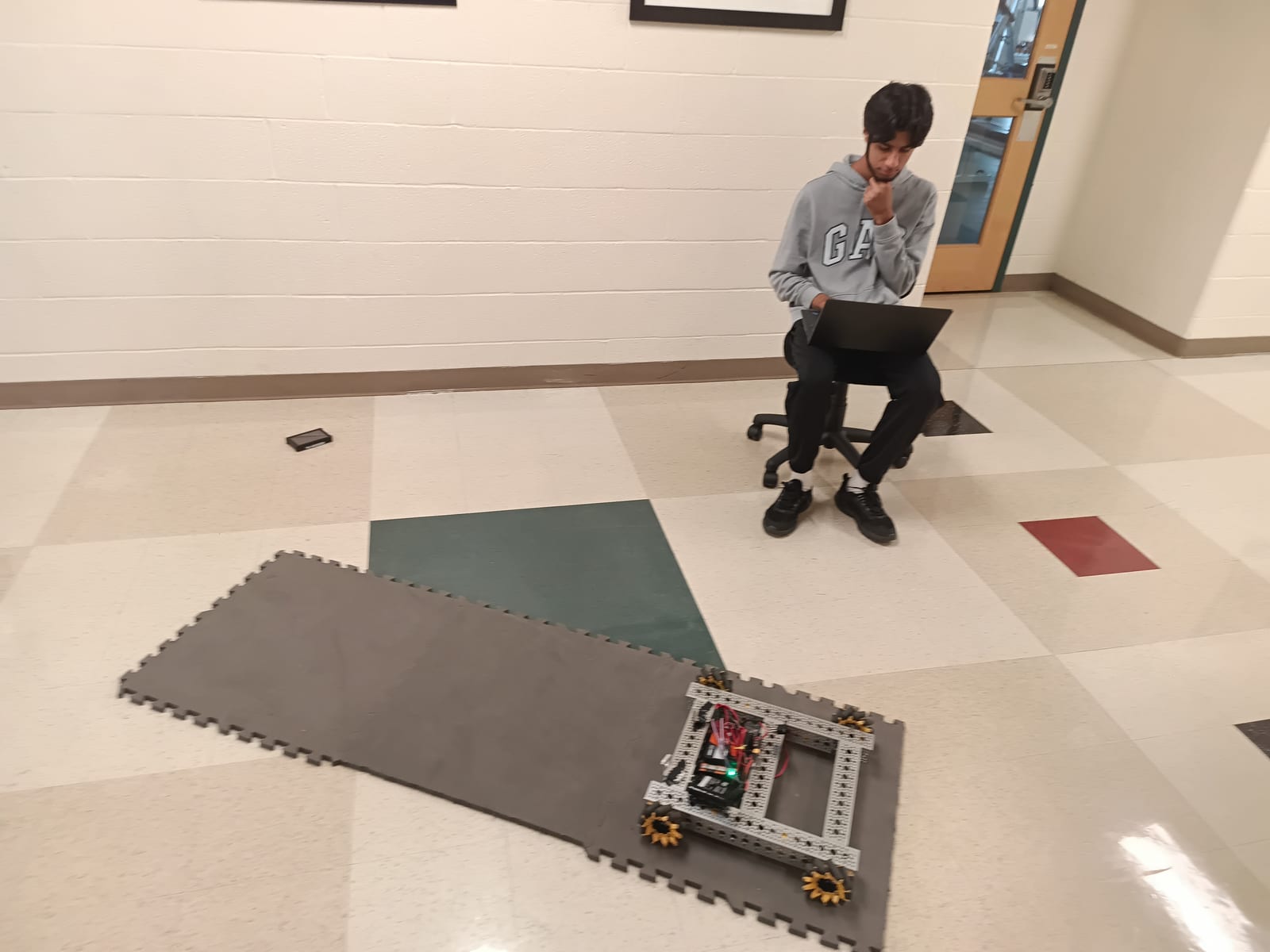
The chassis is aluminum channel on four mecanum wheels, so the robot can strafe sideways as easily as it drives forward. On day one we sketched it on graph paper; by week two we had three mini chassis so more people could build and drive at once.
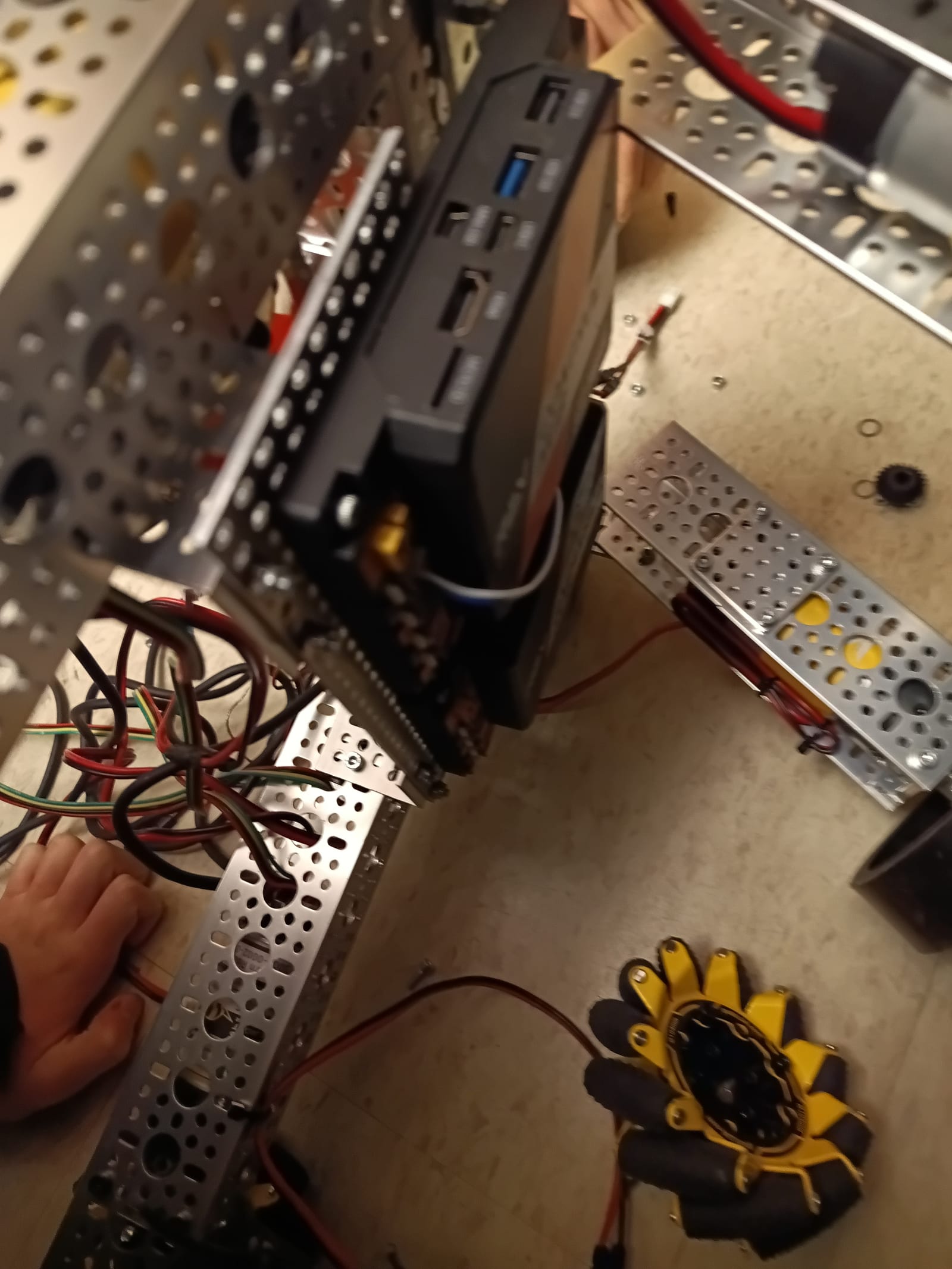
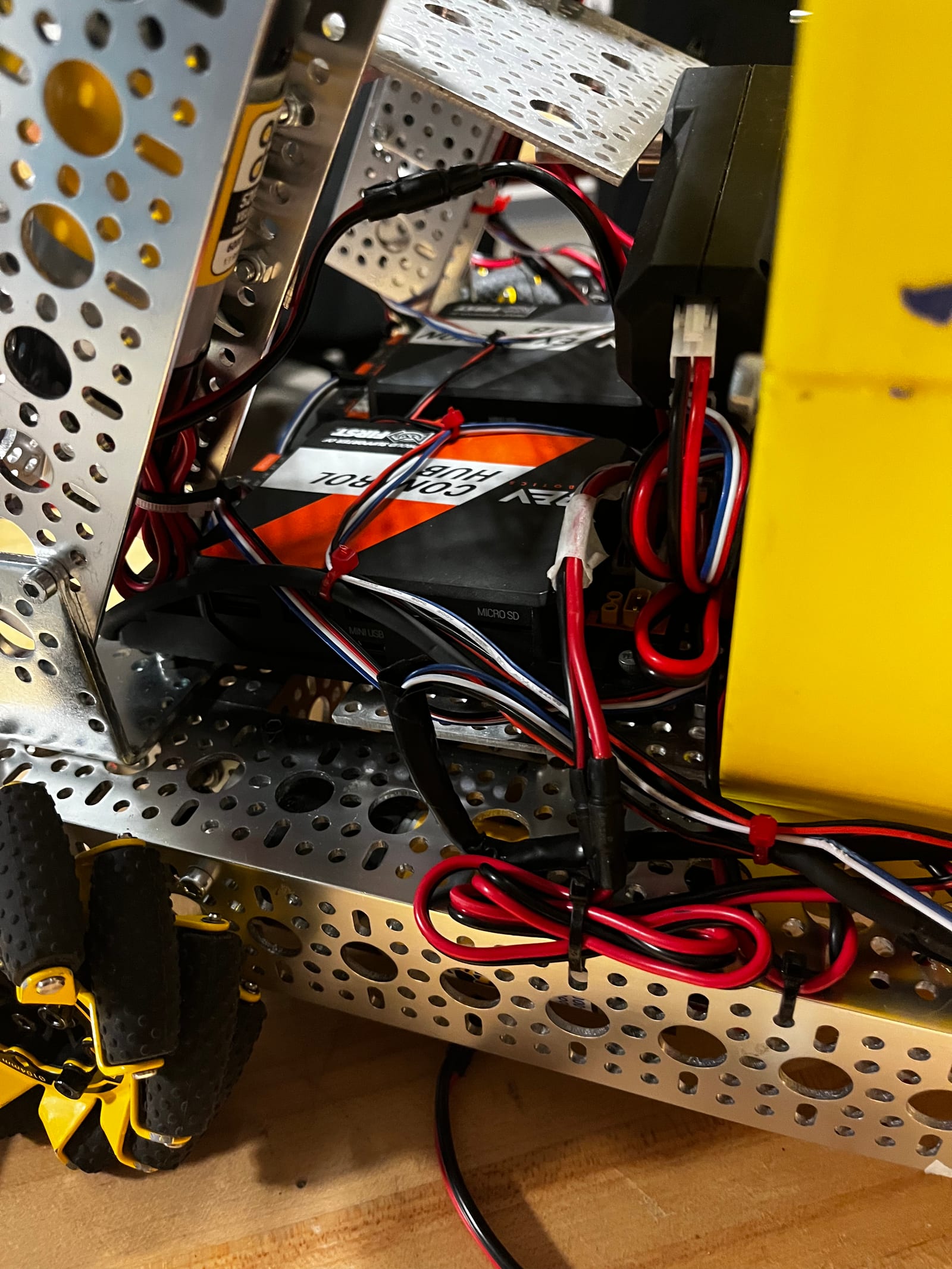
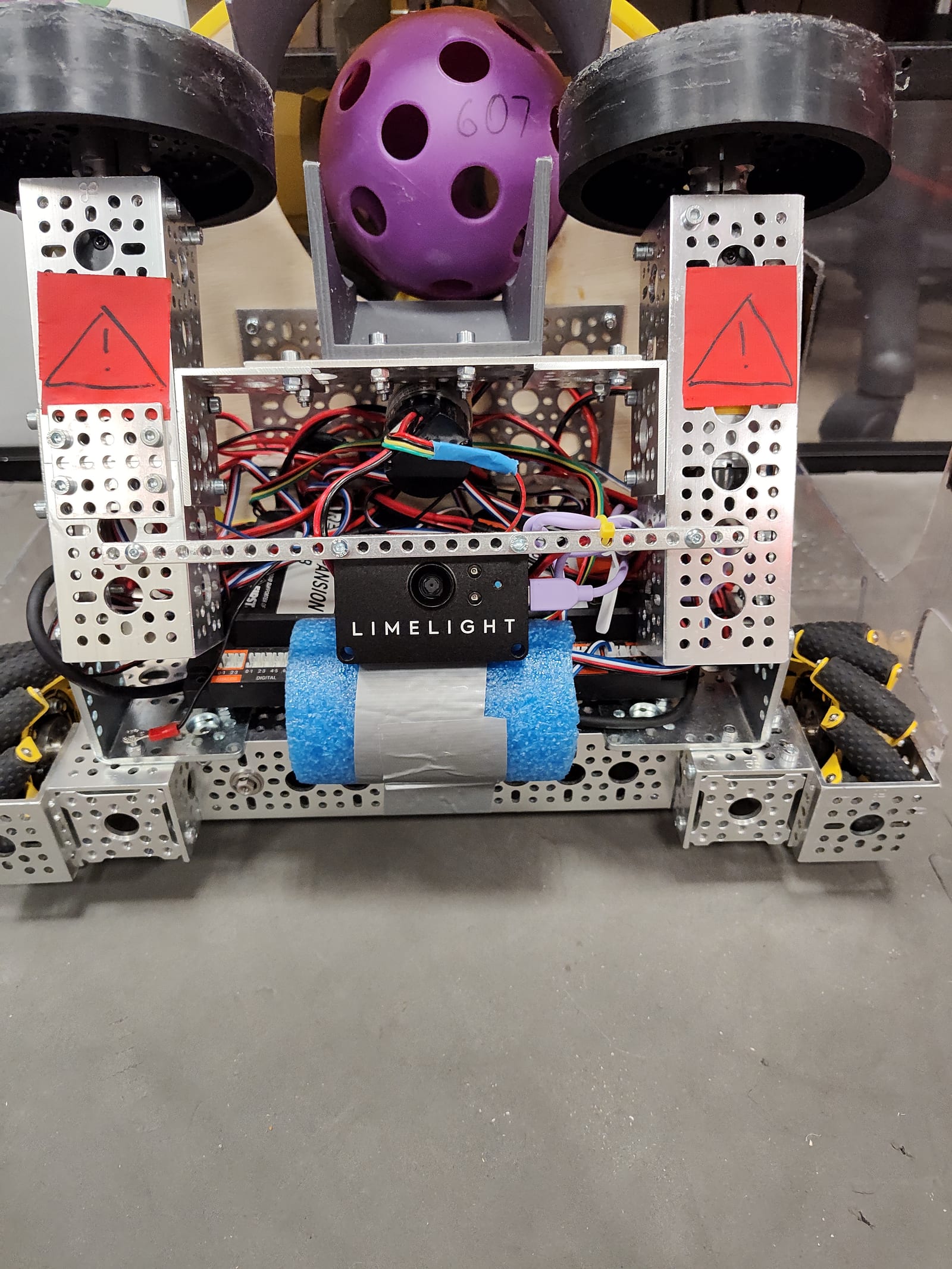
Two dead wheels with encoders ride along the floor and track where the robot actually is, independent of the drive wheels. That's what lets autonomous routines end up where they meant to. In November we moved the Control Hub and Expansion Hub to spots we could actually reach.
- Drive4 mecanum wheels
- Tracking2 dead wheels + encoders
- ElectronicsREV Control Hub + Expansion Hub
Software
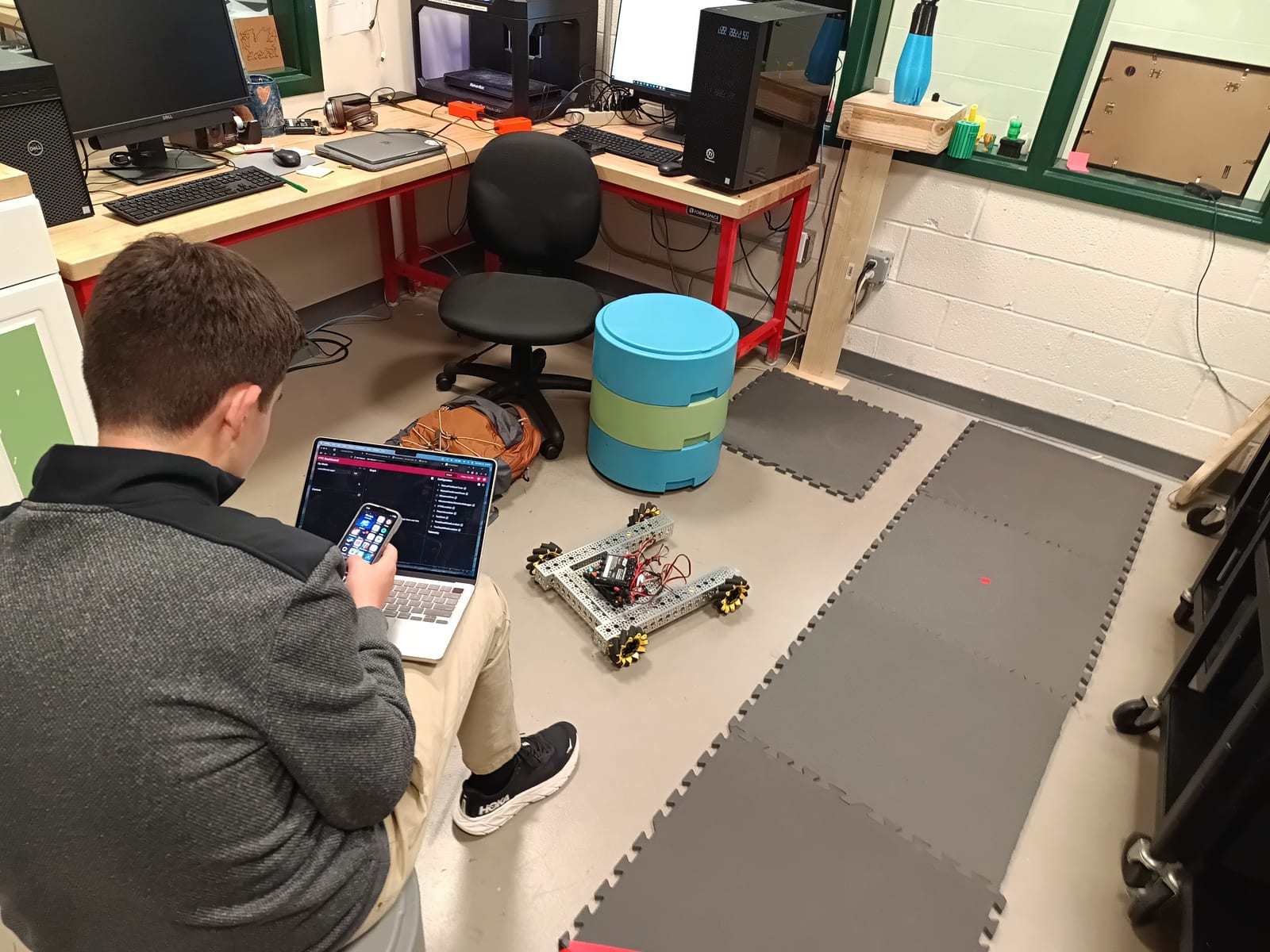
The code runs on the REV Control Hub in Java. Autonomous paths use Road Runner, tuned by driving the robot along a track taped onto the floor of the middle room until the odometry agreed with the tape.
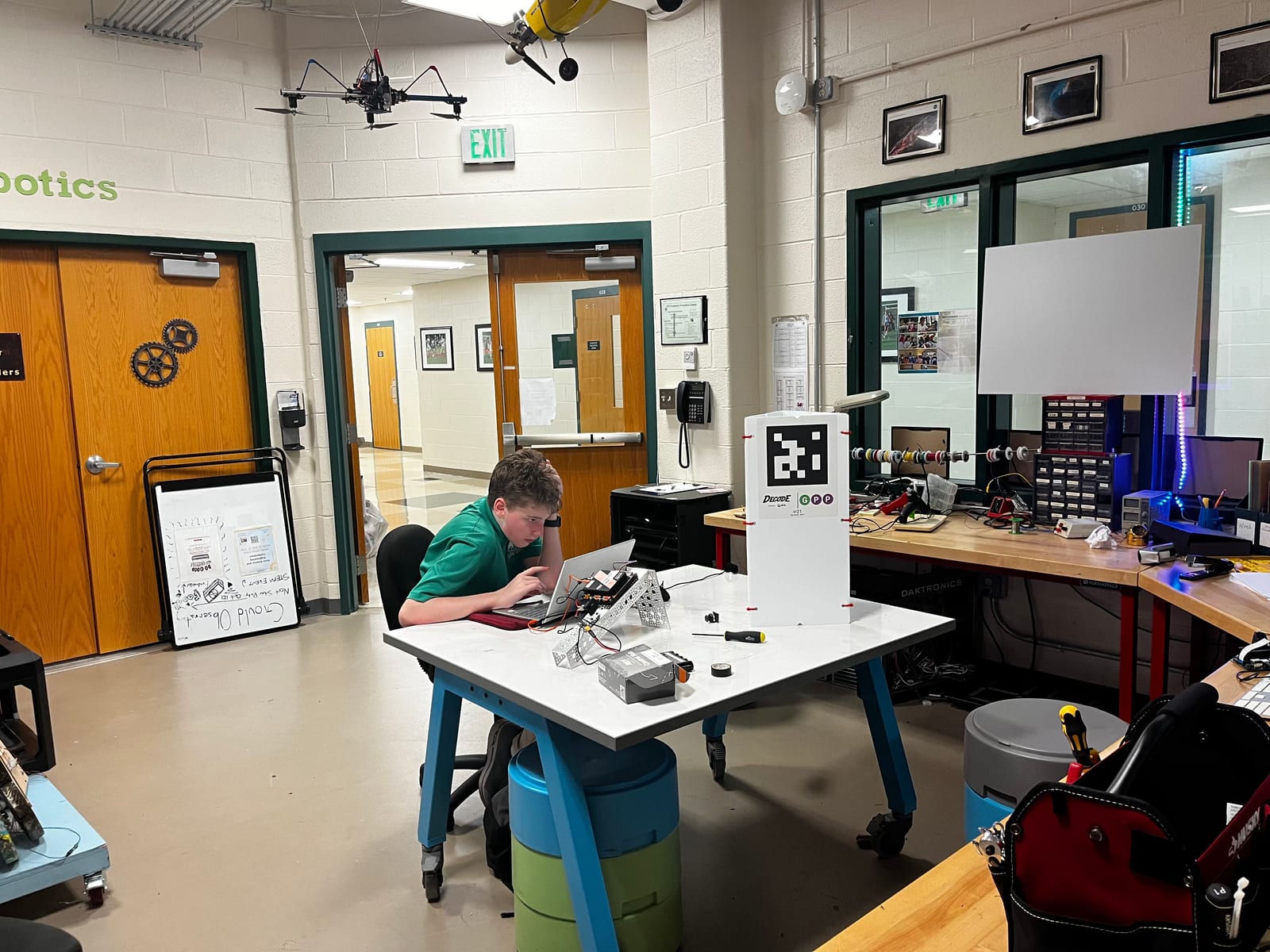
A camera reads the AprilTags on the goals so the robot knows where it is on the field, and a color check tells green artifacts from purple ones. We watch it all live with FTC Dashboard while tuning.
- LanguageJava, FTC SDK
- PathsRoad Runner
- VisionAprilTags, Limelight, color detection
See it move
Practice field
Before the scrimmage we taped out a practice field across the shop floor and ran the full cycle: intake, index the drum, launch, repeat.
Read the season journal